

ATM Skimming
How to check for skimmers
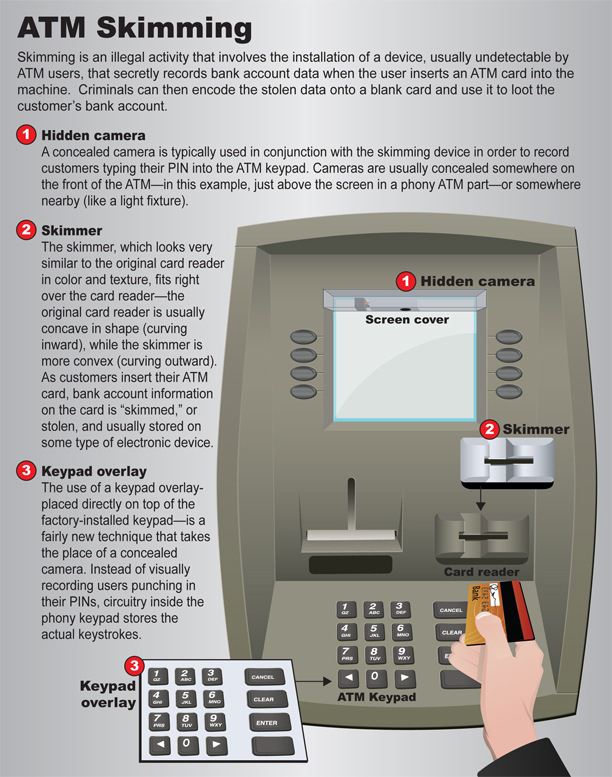
The most frequently used methods of skimming are used on the card reader insert area. Before using an ATM, be observant of the following parts of the ATM:
- PIN keypad
- Card insert slot
Once a skimmer is placed on this card reader, you can see that it looks slightly different, with the card reader appearing raised or bulkier.
When visiting an ATM, check these parts for:
- Tape and/or sticky glue residue on any part of the ATM
- Bulkiness on the card insert area or the PIN keypad
- Anything hanging from the ATM
- Wiggle the card slot or keypad for loose-fitting attachments
Check for additional attachments like pinhole cameras shining down on the keypad. This type of camera device is something that can take place at any ATM terminal or point of sale counter where you insert your card. The camera records your entry of a PIN as you type it in. The device will be painted the same color as the ATM or input terminal.
What if I find a skimmer on an ATM?
If you suspect the ATM you’re using may have a skimming device or if you see something that doesn’t quite seem right, notify the branch so they can take appropriate action. If you notice anything while the branch is closed, contact the police so they can investigate the suspicious activity.
What if I’ve been skimmed?
Make sure you review your transaction history frequently—we suggest at least once a week. If your card has been compromised, catching it early is the best way to minimize losses or inconveniences.
We want to reassure our members that they have zero liability if their cards were to be compromised. Report this fraudulent activity within 60 days of the transaction, and we will replace your card and dispute any charges that are fraudulent.
If you have any questions or concerns, call us at (800) 342-1184.
Tips When Using an ATM
- Choose an ATM in a well-lit location, and have your card or device ready for use
- Do not use an ATM if you are suspicious or it looks damaged
- Check that no one is very close to you when performing a transaction; don't allow someone to help you with a transaction
- Pay attention; do not allow yourself to be distracted while performing a transaction
- Cover the keyboard when entering your PIN
- Cancel the transaction, take your card, and leave the ATM if you feel uncomfortable for any reason
- If you observe anything unusual or suspicious about an ATM transaction you have done or attempted to do, immediately report it to your card issuer using your own contact information (not a telephone number attached to the ATM. Examples of unusual ATM behavior include:
- Your card is not returned,
- Your cash is not delivered, or
- You do not receive a receipt when you request one
- After completing a transaction, make sure you have your own card
Tips To Keep Your Account Safe
- Choose a PIN difficult to guess; avoid personally-identifiable information, such as birthday, ID number, and telephone numbers
- Never write your PIN on the card or keep it with your card
- Add your card issuer's emergency number to your cell phone contacts list
-
- Subscribe to SMS transaction alerts
- Never give your card details or PIN to anyone, even if they claim to be official; your genuine card issuer will never ask you for these details in person or by phone, SMS, email, or website